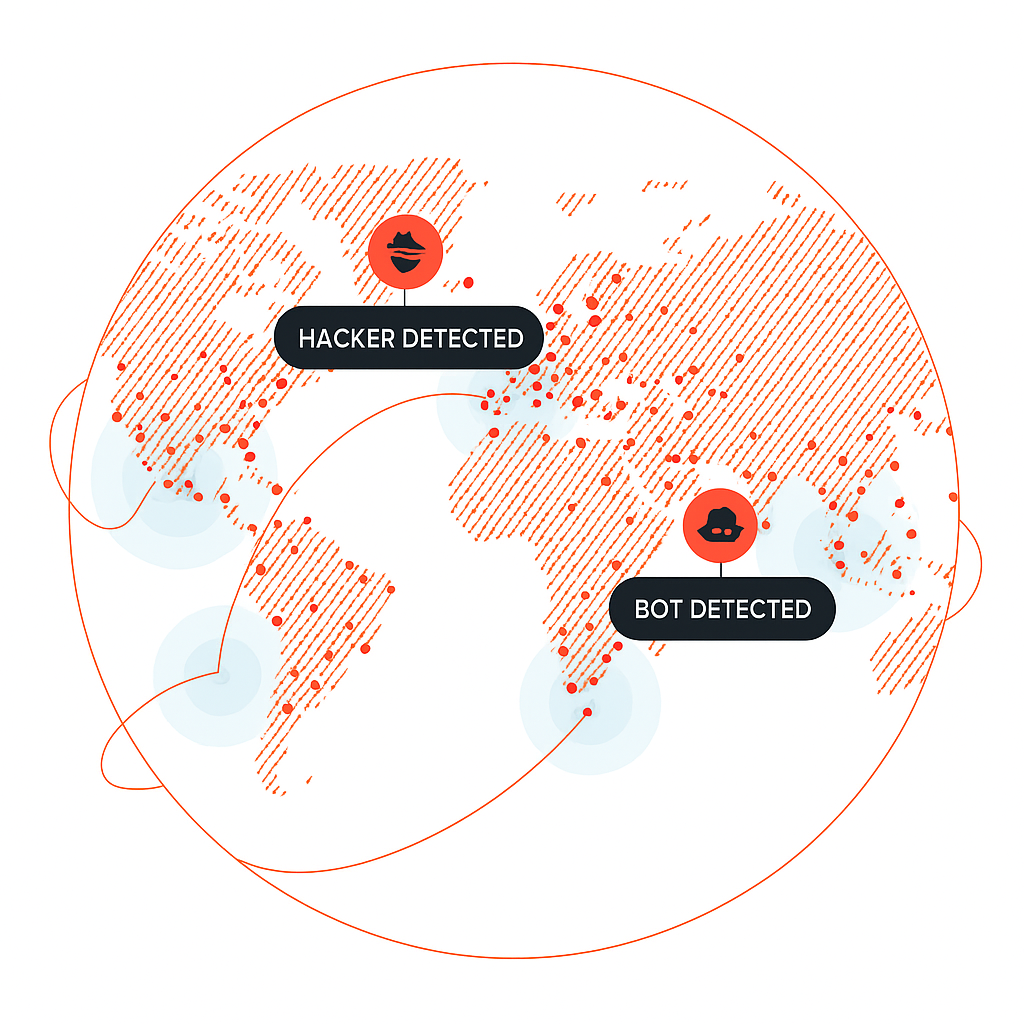
Protect your SaaS before abuse costs customers and runway.
SecureNow plugs into your Node app to defend the routes that matter to a founder: auth, billing, APIs, and AI features. Block abusive sources early, slow costly behavior, give AI agents real production evidence through MCP, and keep building the company.
Auth stays protected
Credential stuffing, brute force loops, fake accounts, reset abuse, and account probing are blocked or slowed before they become your morning.
Costly routes stay controlled
LLM calls, search, exports, enrichment, webhooks, and paid APIs get protection from automation that quietly eats margin.
Billing flows get context
Card testing, checkout retries, coupon abuse, and suspicious payment spikes are tied back to IPs, traces, payload signals, and decisions.
Agents work from evidence
Codex and Claude can inspect SecureNow evidence, request forensics, draft blocks, create rate-limit remediation, and leave an audit trail through MCP.
Try it on your real app. Let the traffic make the case.
Run SecureNow for a few days and see what is already touching your SaaS: bots probing auth, scanners looking for weak paths, abusive IPs hitting APIs, and automation trying expensive routes. Then decide whether those assets should keep running without app-layer visibility.
Day 1
See the traffic you were missing
Watch scanners, bots, suspicious IPs, auth probes, and route spikes show up against your real SaaS instead of an abstract demo.
Day 2
Find the routes that carry business risk
Identify whether login, signup, billing, API, and AI endpoints are absorbing abuse, wasting tokens, or creating account risk.
Day 3
Decide with evidence
Review what SecureNow blocked, what it flagged, what your AI agent can investigate, and whether running without that context still feels acceptable.
You do not need another dashboard. You need abuse handled.
The right security product for a fast SaaS team takes work off the founder's plate: watch the risky routes, show the proof, choose the narrow response, and make the AI agent useful without giving it blind authority.
You are still building the product
You do not have time for a WAF rollout, SIEM project, noisy alert queue, or another dashboard that needs babysitting.
SecureNow gives you the first practical security workflow a SaaS founder needs: block, understand, respond.
Your expensive routes need protection
Auth, billing, AI generation, search, exports, and API calls are not just endpoints. They are revenue, margin, and trust.
SecureNow shows which routes are being abused and gives you route-aware controls before automation becomes spend.
You need answers without hiring a team
When traffic spikes or accounts get attacked, you need to know what happened without stitching together logs, traces, and guesses.
SecureNow links evidence, decision, and remediation so incident response becomes a workflow, not a research project.
SecureNow does the boring, expensive security work before you can hire the team.
A growing SaaS eventually needs abuse monitoring, app-layer visibility, incident response, audit history, and remediation. SecureNow compresses the first version of that operating model into the SDK, dashboard, CLI, MCP server, and agentic workflows.
Bot defense analyst
Filters known-bad IPs, suspicious automation, crawler noise, fake signup sources, and repeated auth abuse.
Incident investigator
Correlates IPs, routes, traces, logs, status codes, payload signals, user agents, and request frequency.
Remediation engineer
Prepares targeted blocks, route-specific rate limits, allowlists, trusted IPs, expirations, and rollback paths.
Cost defense lead
Finds endpoints where abusive traffic becomes model tokens, third-party API bills, CPU, bandwidth, or support work.
Audit and compliance brain
Keeps the evidence, trace IDs, decisions, reasons, recommendations, and human approvals attached to the case.
Agent operator
Gives Codex and Claude structured tools so they can investigate from facts instead of asking you to paste logs.
The point is not replacing judgment. The point is removing the repetitive monitoring, correlation, and response drafting that keeps small teams exposed.
SDK context plus MCP tools is the difference.
Edge tools know an IP and a path. APM tools know latency and errors. SecureNow sits where the abuse actually becomes business damage, then gives your agent the controls to do something useful with that evidence.
$ securenow forensics "why is /api/generate costing so much?"
Found 8,941 requests from flagged sources across 4 ASNs.
Pattern: no session, repeated prompt shape, 97% 200 responses, high token spend.
Prepared: block 31 IPs, rate-limit POST /api/generate, alert Slack, review in 24h.
SDK
Security lives in the request path
SecureNow runs inside your Node app, where the real business context exists. It sees the path, method, status, IP, trace, logs, payload signals, and app environment.
- Credentials-first setup with npx securenow login
- Next.js, Nuxt 3, Vite, Express, Fastify, Koa, Hapi, and NestJS
- Firewall-only or full monitoring mode
Firewall
Bad traffic gets dropped before handlers run
Known scanners, credential stuffers, scrapers, and abusive IPs can be blocked before login, signup, checkout, AI, or API code pays the cost.
- 500k+ known-bad IPs with hourly refresh
- App and environment scoped blocklists
- HTTP, TCP, kernel, and optional cloud WAF layers
Rate limits
Abuse is slowed with route-level precision
Temporary or standing rate-limit remediation rules sync locally, so the SDK can return 429 before expensive handlers do work.
- Natural-language rule drafting
- Path, method, IP, window, and duration controls
- Test requests before enforcing
Agentic AI
The agent investigates and prepares action
SecureNow turns raw telemetry into an incident verdict: what happened, which endpoints were hit, which IPs matter, what confidence you have, and what to do next.
- Plain-English forensics
- Trace, log, body, multipart, and IP intelligence evidence
- Block, rate-limit, tune, or defer decisions
MCP
AI tools get a real control plane
The MCP server exposes SecureNow's evidence and remediation tools to Codex, Claude, and other agentic clients with confirmations and reasons for writes.
- Apps, firewall, traces, logs, notifications
- IP intelligence and forensics
- Blocklist and rate-limit remediation
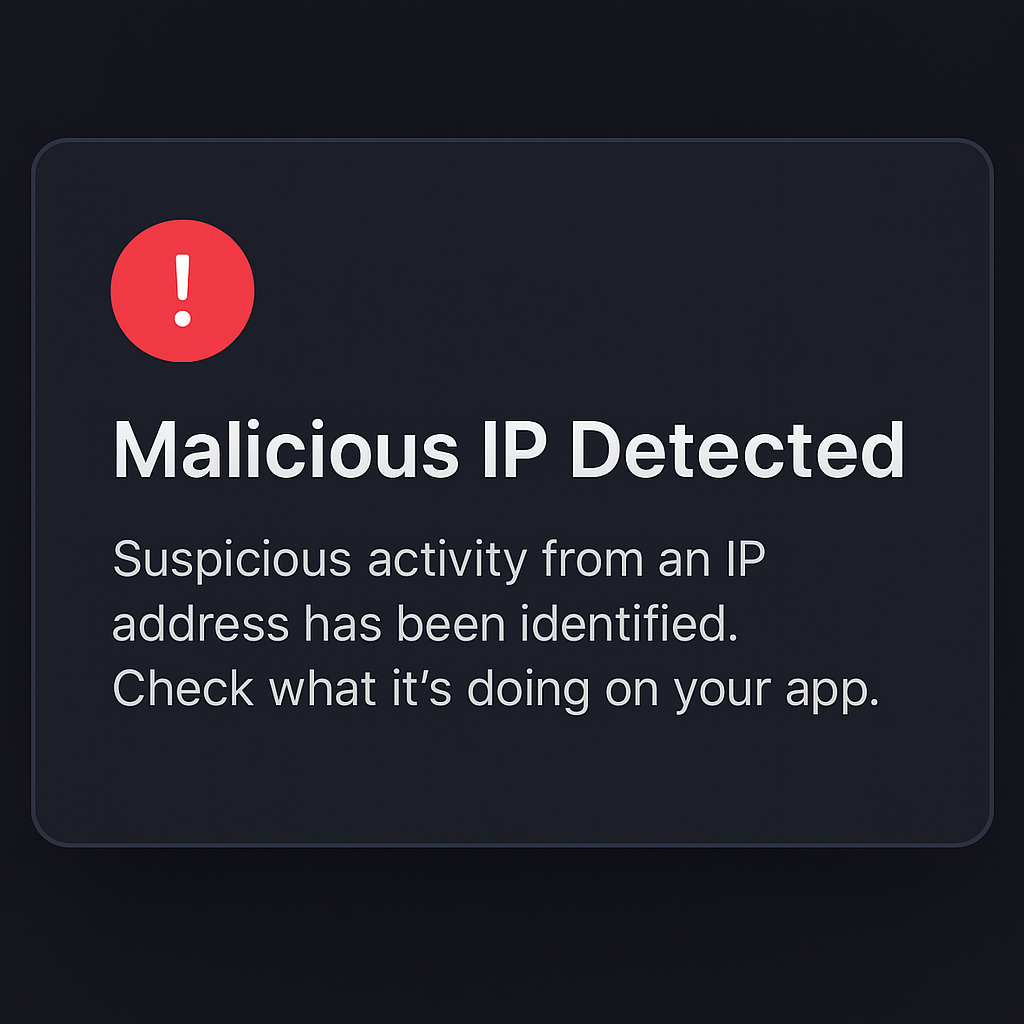
Detect the abuse pattern
Find failed auth bursts, fake signups, suspicious user agents, repeated expensive calls, flagged IPs, and payload anomalies.
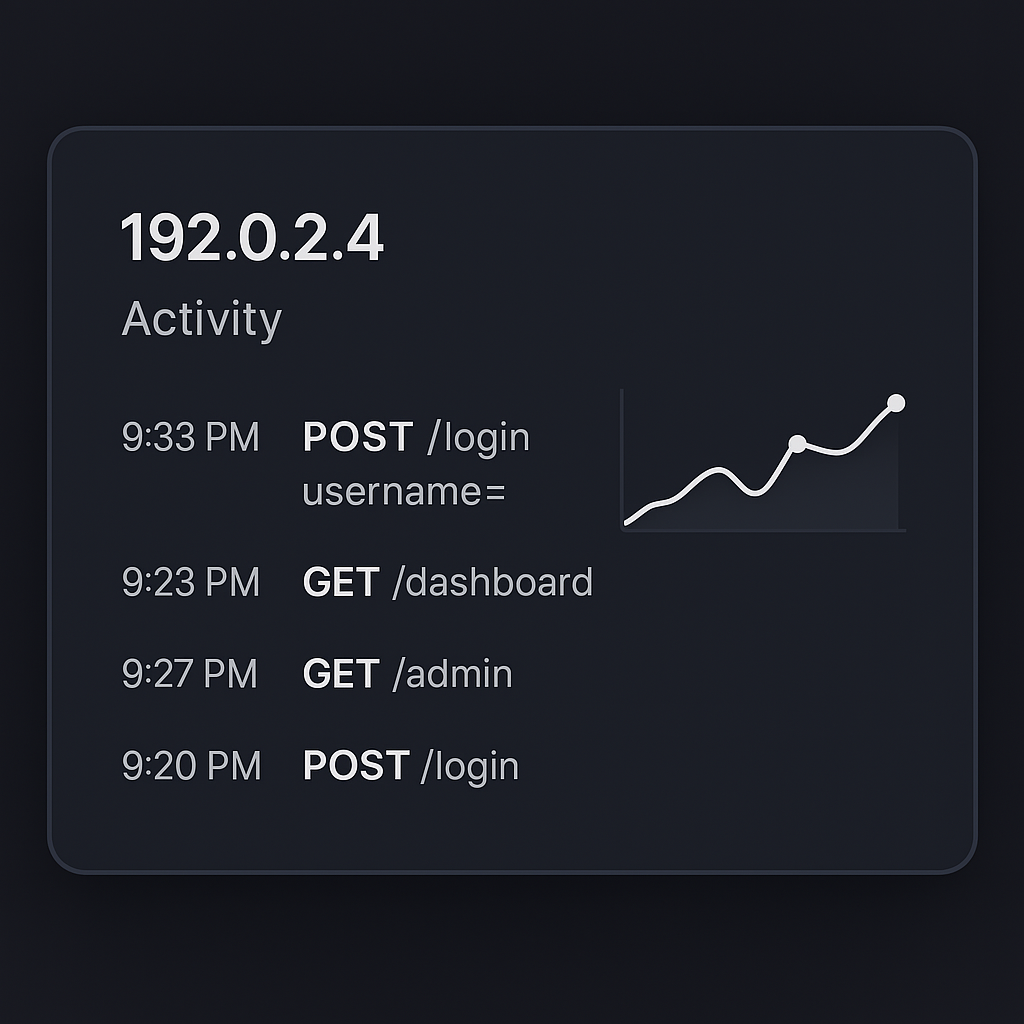
Explain the incident
Pivot from one IP to traces, logs, request bodies, endpoints, status codes, user journey, and agent-generated evidence.
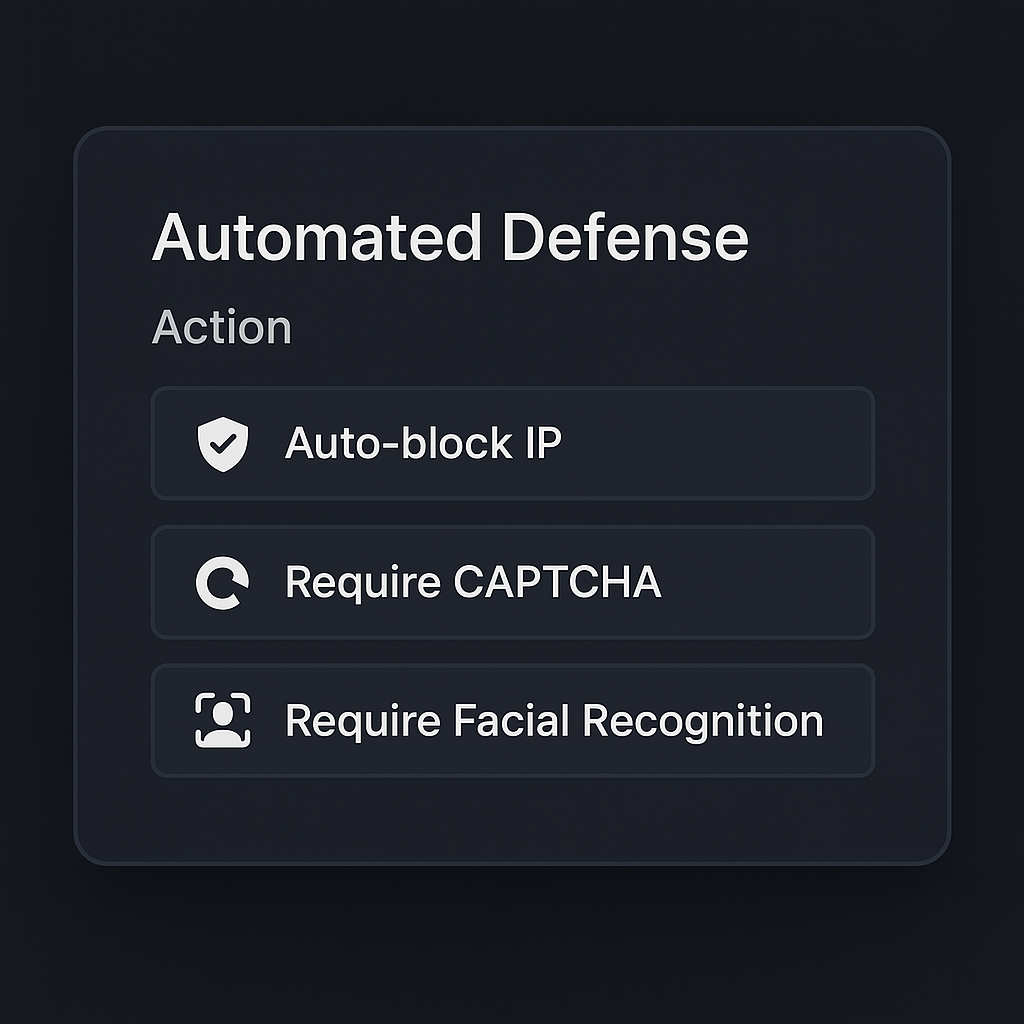
Apply the narrow fix
Block the source, rate-limit the route, trust a monitor, allowlist a partner, tune a rule, and keep the decision history.
Your AI agent stops being a commentator and becomes an operator.
The old AI workflow is paste logs, ask for advice, copy a guess. The SecureNow workflow is inspect production evidence, prepare a precise action, require confirmation, and record the reason.
Founder asks
"Is anything abusing signup, login, checkout, or AI generation right now?"
SecureNow investigates
It checks traces, logs, IP intelligence, status codes, payload signals, route frequency, user agents, and recent notifications.
Agent returns a verdict
Credential stuffing on login, fake signup burst, AI endpoint burn, card testing, scraper campaign, or clean traffic with proof.
Response is prepared
Block exact sources, create a temporary rate limit, alert the team, mark a false positive, or tune the rule with an audit trail.
The first layer takes minutes. The full system grows with you.
Start with firewall-only mode when the urgent job is reducing bot traffic. Turn on full telemetry when you want traces, logs, request context, alerts, agentic investigations, and MCP remediation. Same plan, same app.
Install the security layer
Add the current SecureNow SDK to your Node app.
npm install securenow@latestConnect your account
Create or pick the app and write .securenow/runtime.json with the runtime API key for SDK ingestion and firewall sync. Admin CLI/MCP auth lives in .securenow/admin.json.
npx securenow login
npx securenow app connect
Start protected
Start with firewall-only mode, or use securenow/register for full telemetry.
node -r securenow/firewall-only app.jsGive agents tools
Let agentic clients investigate and prepare remediation from production evidence.
codex mcp add securenow -- npx securenow mcpSecureNow is not a point tool. It is the security loop your SaaS needs first.
The reason this should feel obvious: every piece reinforces the next one. The SDK sees the app. The firewall blocks early. Rate limits protect costly behavior. Traces explain impact. MCP gives agents hands. Humans approve high-impact actions.
| Founder need | Patchwork approach | SecureNow approach |
|---|---|---|
| Contain active abuse | WAF project, DNS move, rules someone has to babysit | SDK firewall blocks known-bad sources in the app request path with scoped blocklists and allowlists |
| Protect AI and API costs | Generic middleware plus a bill you discover later | Route-aware rate limits and evidence for which endpoint, IP, method, and pattern created the burn |
| Know what happened | APM tab, logs tab, WAF tab, pasted screenshots, guesswork | Traces, logs, request context, IP intelligence, notifications, and AI forensics in one workflow |
| Let AI do real work | Prompt an assistant with fragments and hope it guesses correctly | MCP tools let agents inspect production evidence and prepare confirmed, auditable actions |
| Operate as a small team | Hire specialists before revenue supports the team | Automate the monitoring, triage, enrichment, and remediation work a senior security pod would do first |
The questions before a founder says yes.
Why would a SaaS founder choose SecureNow instead of a WAF plus APM?
Because abuse is not only an edge problem and not only an observability problem. SecureNow sits inside your Node app, blocks known-bad sources, sees the route, status, trace, payload signals, and user journey, then exposes that evidence to agents through CLI and MCP. You get prevention, investigation, and response in one operating loop.
Is SecureNow replacing a security hire?
SecureNow is not a replacement for judgment. It removes the repetitive work that usually forces founders to hire security help earlier than planned: watch risky traffic, enrich IPs, correlate traces and logs, identify abuse, draft precise blocks or rate limits, preserve audit history, and help your AI agent act safely.
What should I protect first?
Start with the routes attackers and bots monetize first: login, signup, password reset, checkout, payments, API keys, AI generation, search, exports, and expensive third-party calls. SecureNow helps you see which routes are being abused and apply the narrowest response that works.
What should I look for during the free trial?
Run SecureNow for a few days and watch what actually touches your app: blocked IPs, auth probes, suspicious user agents, repeated API calls, costly AI routes, payment retries, and the incident summaries your agent can work from. Then decide whether you are comfortable running those routes without that visibility.
How precise are the blocking and rate limits?
You can block exact IPs or CIDRs, scope enforcement by app and environment, add expirations, keep allowlists and trusted IPs, test an IP before enforcing, and create route-specific rate limits by natural language, CLI, dashboard, or MCP-assisted workflows.
What does MCP change?
MCP gives Codex, Claude, and other agentic clients a real SecureNow tool surface: apps, firewall status, traces, logs, notifications, IP intelligence, forensics, blocklists, allowlists, trusted IPs, rate-limit remediation, and docs-backed setup prompts. Agents stop guessing from screenshots and start working from production evidence.
Do I need Cloudflare, AWS WAF, or a load balancer change?
No. SecureNow runs inside your Node.js app. Firewall-only mode starts with a preload, and full monitoring uses the same runtime path. No DNS move, edge rewrite, or load-balancer project is required to get started.
Give SecureNow 14 days with your traffic.
See what is probing your auth, billing, API, and AI routes. If the findings do not change how you think about running blind, you will know. If they do, you already have the protection layer in place.